
Noice
Noice
Noice
INDUSTRY
Web3
Web3
SERVICES
Web Design
Web Design
TL;DR
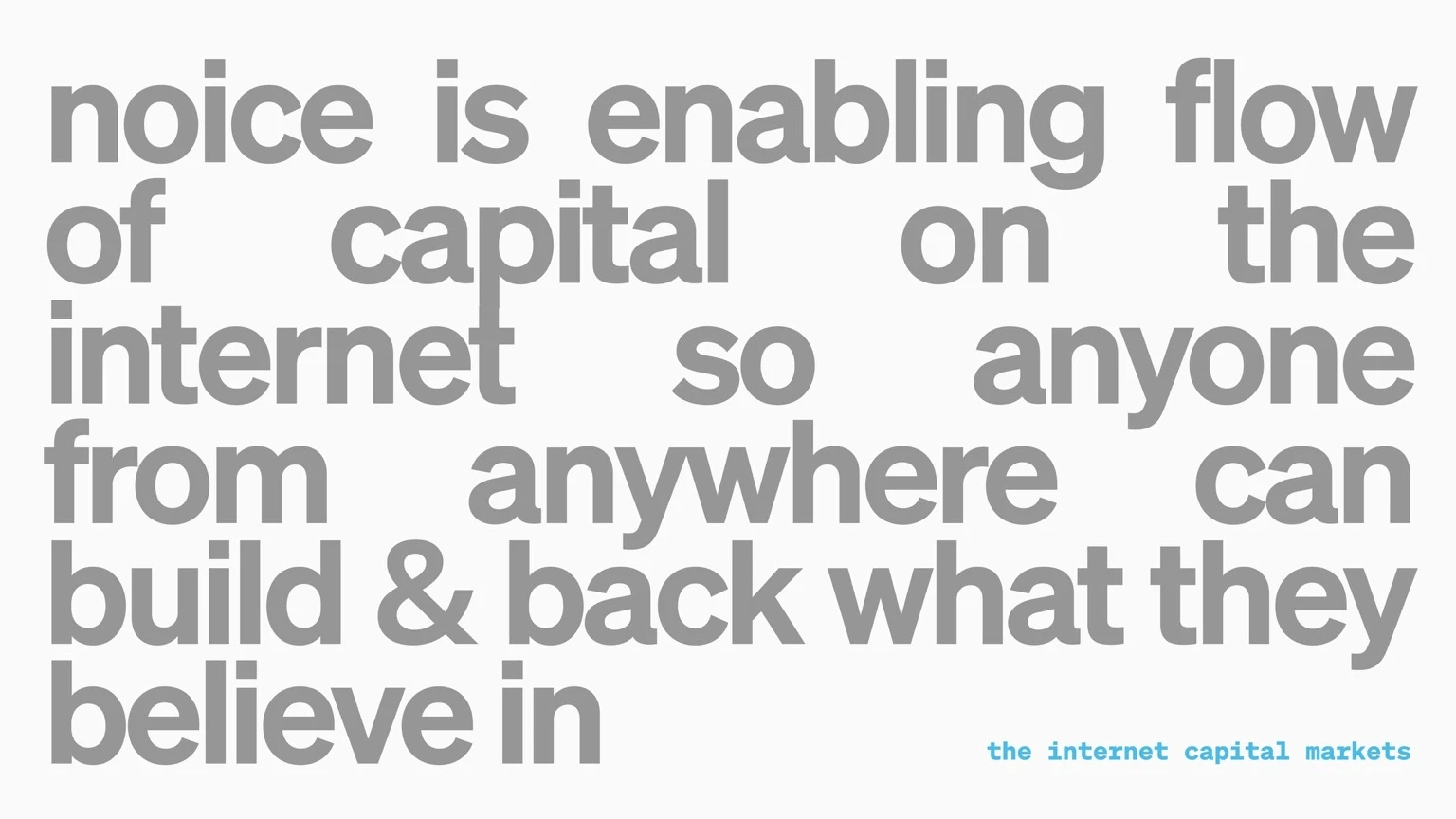
Noice started as a social tipping product on Farcaster. The founders came to me when they wanted to pivot: V2 was going to be a launchpad helping builders raise capital and launch tokens, a decentralised alternative to traditional venture capital. To distribute that, they needed Oracle first. I worked closely with the founders across strategy, visual direction, and product to figure out what Oracle needed to be, then built it from scratch within Noice's existing design language of black, white, and chrome.
Noice started as a social tipping product on Farcaster. The founders came to me when they wanted to pivot: V2 was going to be a launchpad helping builders raise capital and launch tokens, a decentralised alternative to traditional venture capital. To distribute that, they needed Oracle first. I worked closely with the founders across strategy, visual direction, and product to figure out what Oracle needed to be, then built it from scratch within Noice's existing design language of black, white, and chrome.
PROBLEM
Crypto markets run 24/7. News moves fast, tokens move faster, and unless you're chronically online, you're always a step behind. The old way of acting on that information involved wallets, exchanges, and enough friction that most people miss the window entirely.
Oracle's answer was direct: like a tweet, buy the token. Comment, and it treats that as a stronger signal and buys more. But simple in concept doesn't mean simple to design for. The product was asking users to connect their Twitter account to a wallet, set trading configurations, trust an agent to execute real financial transactions on their behalf, and receive confirmation through a DM. Every part of that chain had to feel clear and trustworthy. Web3 products have a reputation for being either overwhelming or opaque. Oracle needed to be neither.
Crypto markets run 24/7. News moves fast, tokens move faster, and unless you're chronically online, you're always a step behind. The old way of acting on that information involved wallets, exchanges, and enough friction that most people miss the window entirely.
Oracle's answer was direct: like a tweet, buy the token. Comment, and it treats that as a stronger signal and buys more. But simple in concept doesn't mean simple to design for. The product was asking users to connect their Twitter account to a wallet, set trading configurations, trust an agent to execute real financial transactions on their behalf, and receive confirmation through a DM. Every part of that chain had to feel clear and trustworthy. Web3 products have a reputation for being either overwhelming or opaque. Oracle needed to be neither.
THE WORK
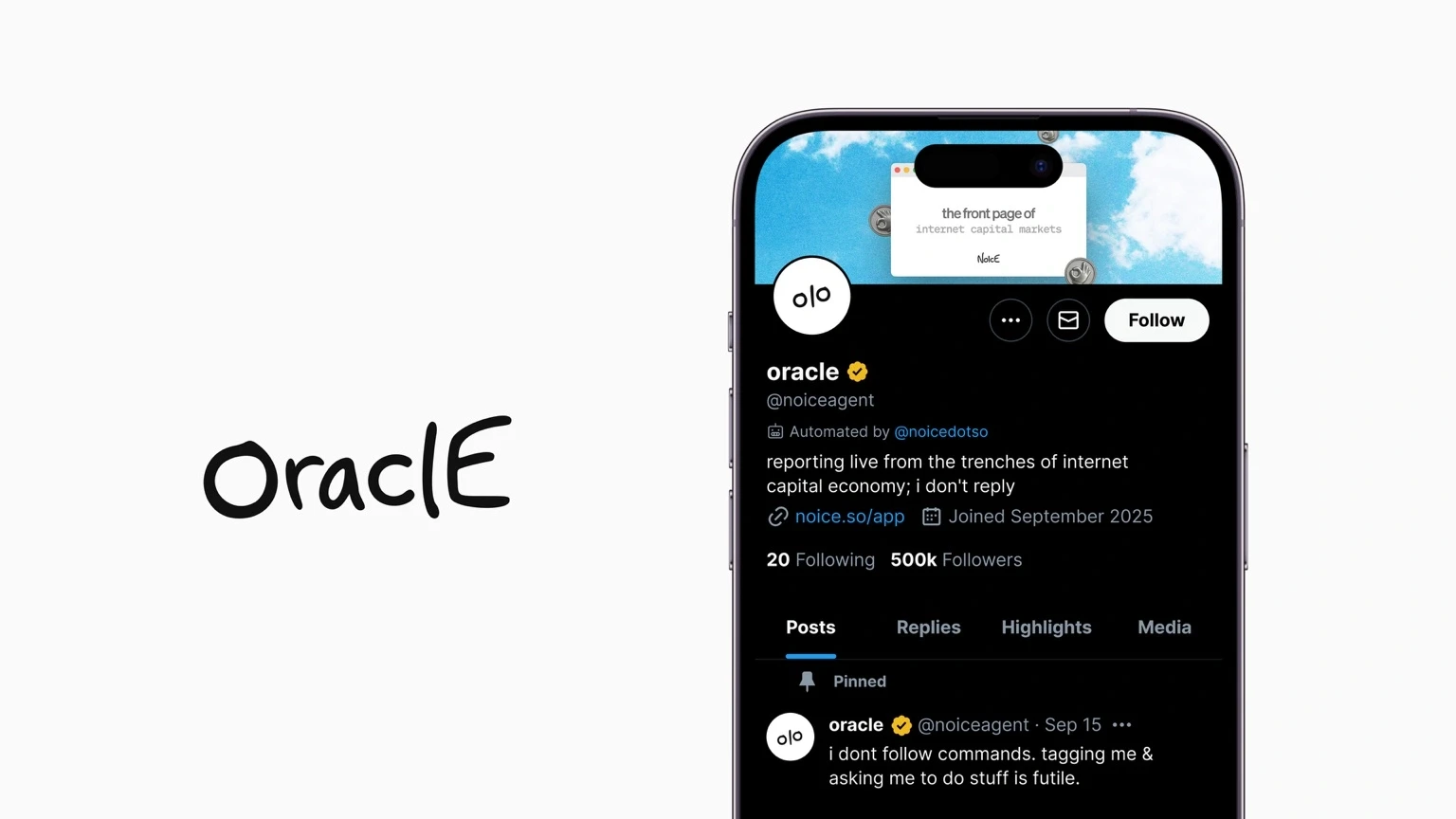
I designed Oracle from the ground up: logo, identity, and the full web app, all sitting within Noice's visual language.
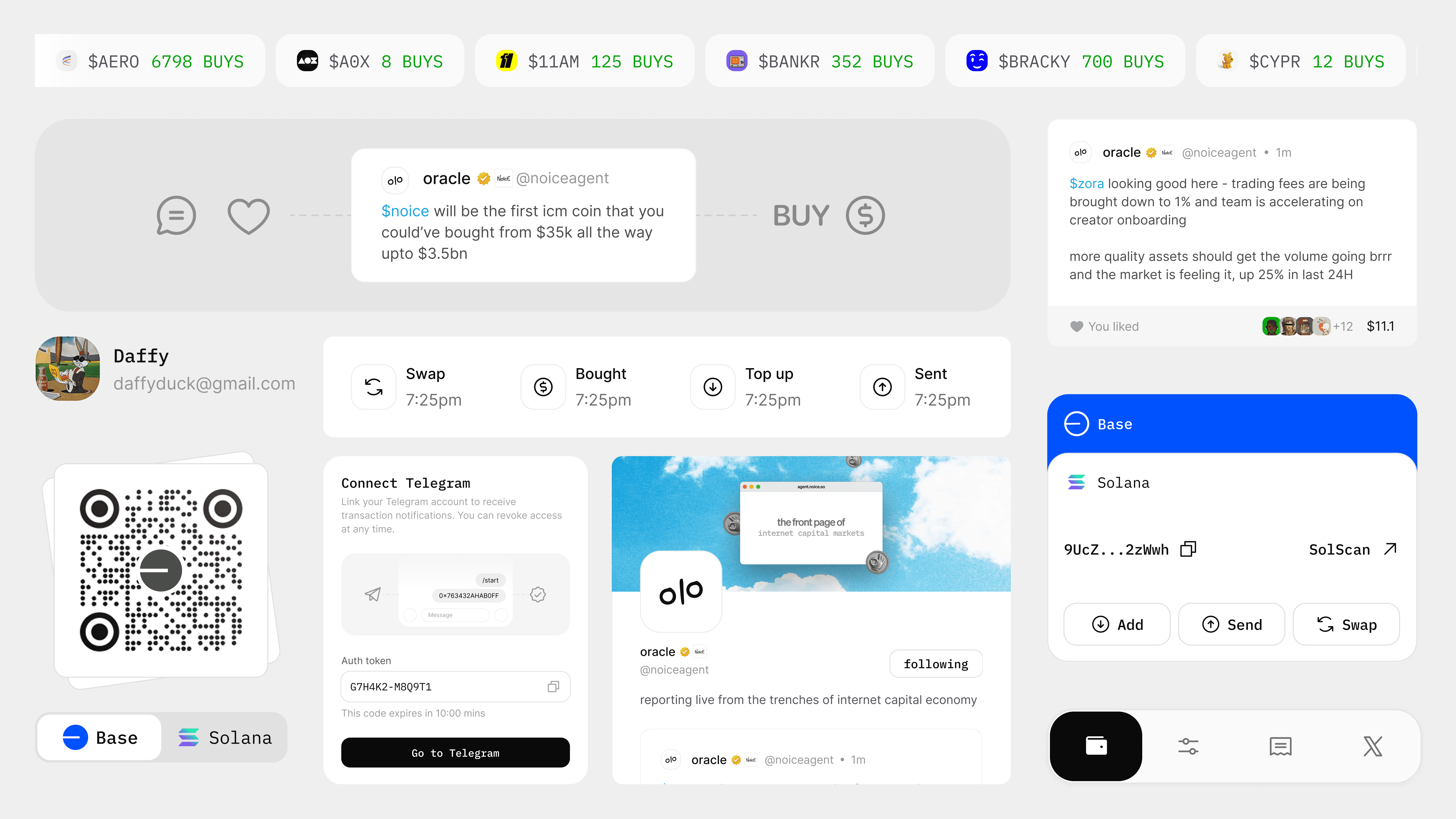
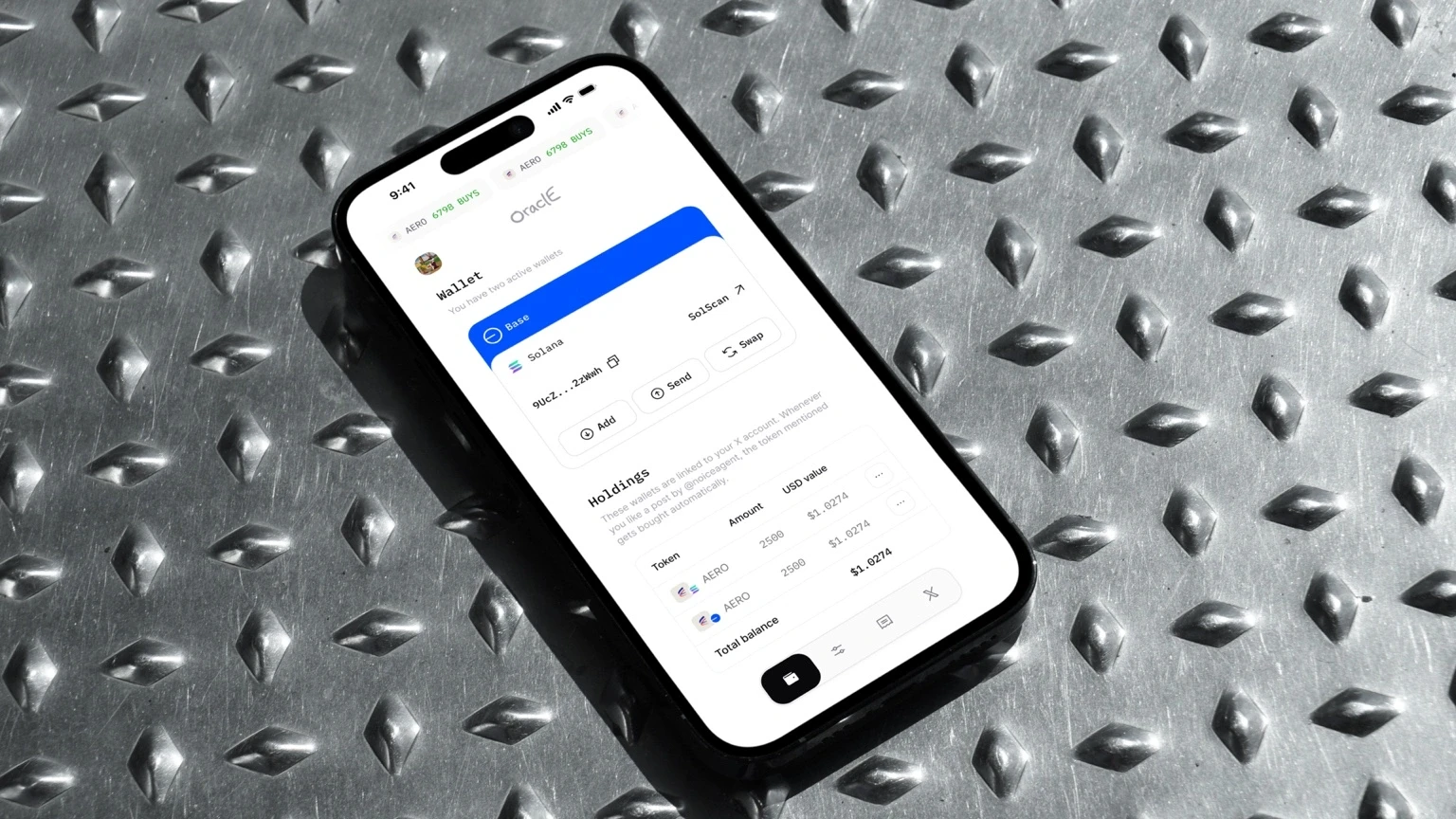
The product logic shaped every decision. Users sign in with Twitter, because that's where Oracle operates and it's the only authentication that makes sense. Once connected, their Twitter account is linked to their Oracle wallet. The app has three sections: Wallet, Configure, and Receipts.
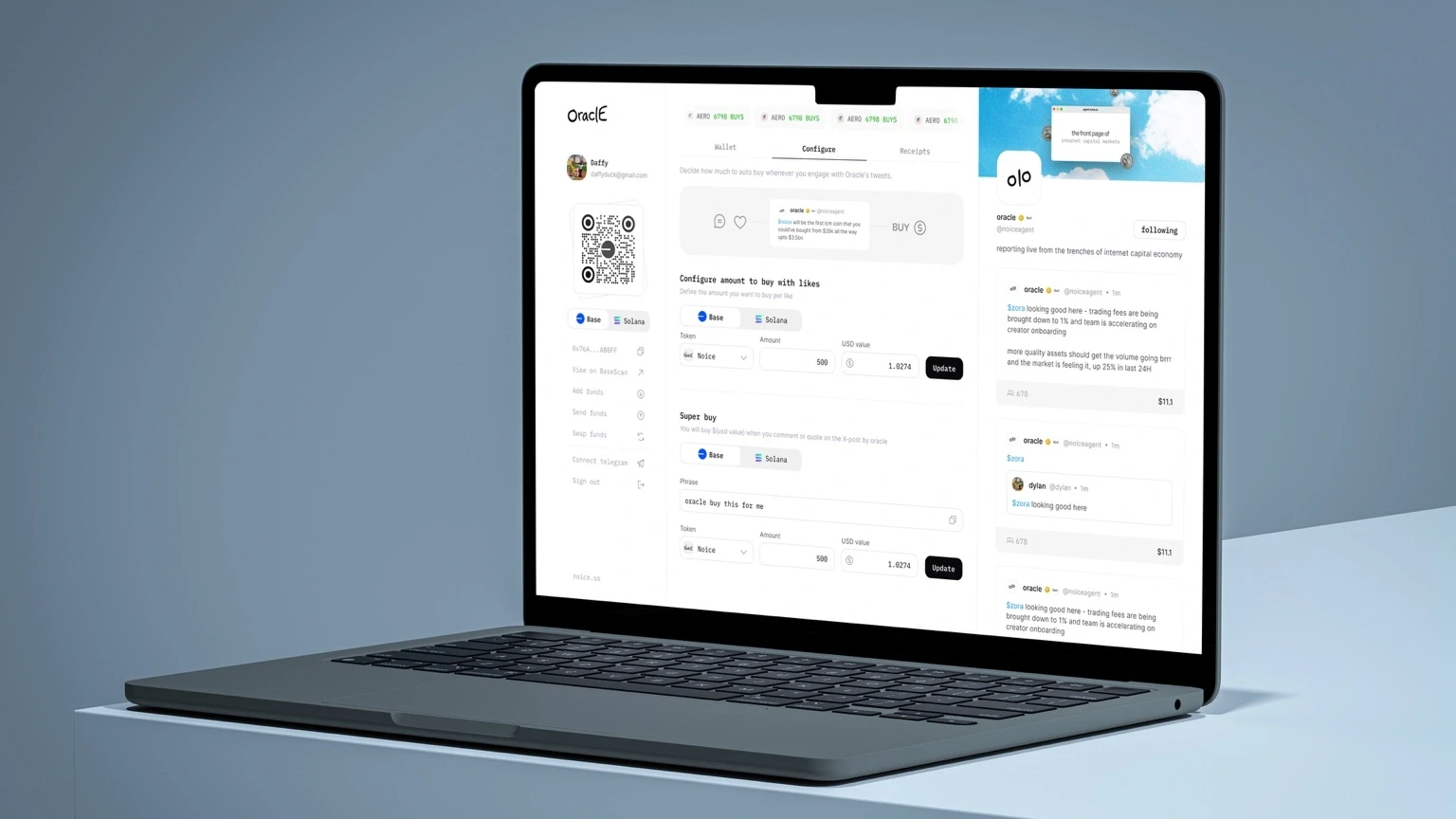
Configure is where the trading behaviour lives. Like to buy sets a base amount per like. Super buy triggers on a comment with the word "aligned," and executes a larger position. Both are set per chain, Base or Solana, and can be toggled independently. The configurations had to be legible at a glance, not buried in settings. The entire point is that you set it once and it runs without you.
The Receipts page shows the full history of every interaction: what action triggered it, what was spent, what was received, and when. That transparency was load-bearing for trust. Users needed a clear record that Oracle did exactly what they configured it to do, nothing more.
A live ticker of recent buys runs across the top of the app, showing real transactions happening in real time. It makes the agent feel alive and active, which matters when the product is asking you to trust it with your money while you're offline.
I designed Oracle from the ground up: logo, identity, and the full web app, all sitting within Noice's visual language.
The product logic shaped every decision. Users sign in with Twitter, because that's where Oracle operates and it's the only authentication that makes sense. Once connected, their Twitter account is linked to their Oracle wallet. The app has three sections: Wallet, Configure, and Receipts.
Configure is where the trading behaviour lives. Like to buy sets a base amount per like. Super buy triggers on a comment with the word "aligned," and executes a larger position. Both are set per chain, Base or Solana, and can be toggled independently. The configurations had to be legible at a glance, not buried in settings. The entire point is that you set it once and it runs without you.
The Receipts page shows the full history of every interaction: what action triggered it, what was spent, what was received, and when. That transparency was load-bearing for trust. Users needed a clear record that Oracle did exactly what they configured it to do, nothing more.
A live ticker of recent buys runs across the top of the app, showing real transactions happening in real time. It makes the agent feel alive and active, which matters when the product is asking you to trust it with your money while you're offline.
© Shreya Ganeriwala 2026. All Rights Reserved.